ADS

Showing posts with label Iraq. Show all posts

Wednesday, February 22, 2012

No corruption cases in US arms deals

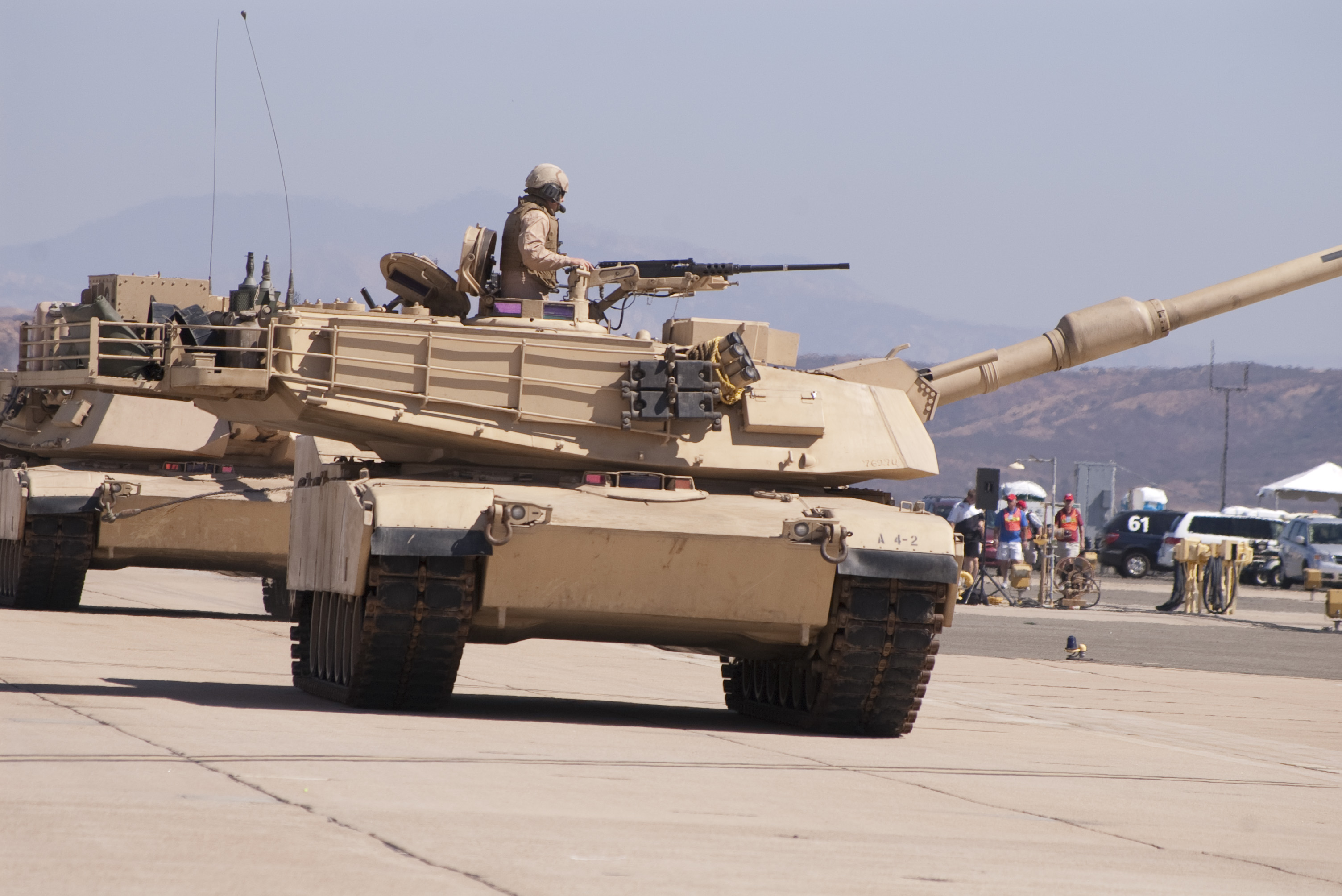
A Parliamentary Security and Defense Commission member denied today any corruption cases in arms deals with the United States. "Contracts were made with the USA to buy M1 Abrams Main Battle Tanks and fighter planes," MP Qassim al-Araji told Aswat al-Iraq. 

Friday, October 29, 2010

Airmen Train Iraqi Pilots to become T-6 Texan II Instructor Pilots

For the past six months, Iraqi Training and Advisory Mission-Air Force air advisers with the 52nd Expeditionary Flying Training Squadron have been training Iraqi pilots to become T-6 Texan II instructor pilots to rebuild the Iraqi air force.

"The 52nd (EFTS) stood up this year for T-6 flight operations," said Brig. Gen. Scott Hanson, the ITAM-AF director and 321st Air Expeditionary Wing commander. "It's an expeditionary flying training squadron teaching the Iraqi instructor-pilot candidates who are going through pilot-instructor training. Our concept at that venue is to build their instructor-pilot corps first, before they incorporate that platform into their overall pilot training pipeline."

Air advisers here are responsible for training instructor pilot candidates and advising the Iraqi airmen on building the training program necessary to set their air force up for success in the years to come.

"Our job is to help the Iraqis start the foundation of their pilot training program," said Lt. Col. Jeffrey Myer, the 52nd EFTS' first operations officer who recently redeployed. "Basically, we're advising and training them to start building their pilot training program back up as they rebuild their air force."

Colonel Myer arrived one year ago with two other instructor pilots and no aircraft to set up the training squadron. Now they have 11 aircraft and a squadron of pilot trainees.

"We have a great operating area here," Colonel Myer said. "We have airspace, pattern procedures; all those things that didn't exist when we got here and it's really satisfying as I look back to see we went from nothing to a great training program, and it's only going to get better."

As they move through T-6 training, air advisors will give them critical advice for when they become instructors, but ultimately the instructor training is the next phase, once they learn to fly the T-6.

"We essentially adapt what they already know to the T-6 and the high-performance, two-seat aspect of flying," said Capt. Ryan Smith, the 52nd EFTS student flight commander. "It's an initial learn how to fly, and the next stage is when they transition over to what we call a 'PIT' syllabus, which is pilot instructor training. That's where we actually teach them how to teach what they've learned, which is a different ball game."

As the advisors conduct training nearly 7,000 miles from home, pilot training in Iraq is strikingly comparable to that in America, but with key differences including the language barrier, cultural differences and the fact their mission is conducted in a combat zone.

"The training environment isn't nearly as stable as we'd like it to be," Captain Smith said. "In the U.S., we have a very structured program and eliminate many variables. However, when we train here in a combat zone, we don't control all those variables quite as well. We have to be a lot more flexible."

But as long as they are here they have a mission to complete before Dec. 31, 2011, when all U.S. forces are scheduled to leave Iraq. The goal is to develop, with the Iraqi air force, a successful flying T-6 training program.

"As long as we're here, our job is to set them up with the best pilot training program that we can offer," Captain Smith said. "So ideally, as we get closer and closer to end of mission, we're handing more and more of the pilot training over to the Iraqis, who we're training right now. Within the next year, we'll step back further and further to the point they will be running the briefings, making the schedules and training the new student pilots as it come in."

Training with the U.S. air advisors, combined with the chance to become an instructor pilot in the Iraqi air force excites current students.

"I'm happy I get this chance to be an instructor," said 2nd Lt. Issa Amen, a Iraqi Training Squadron No. 3 student pilot. "American pilots are the best pilots in the world, this is the truth. We get a chance to get our training from the best pilots."

"It's a very good opportunity for us to work with American advisors," said Lt. Col. Hamid Hussein, the Training Squadron No. 3 commander. "All of them are very experienced, very good people, very easy to work with and they are providing everything they can in helping to build the Iraqi air force."

The excitement the Iraqis have for their air force is shared by their air advisors. Colonel Myer said he is excited to see it being rebuilt.

"It's an awesome experience to take them through it and be with them from the beginning," he said. "To just see the smile on the Iraqi maintainers as they see this airplane is great. They see that it says 'Iraqi air force' on it. That's a symbol to them that their air force is being rebuilt. It's a great reward to see that and their enthusiasm."

Sunday, September 26, 2010

Iraq Plans to Buy 24 Hawk Jet Training Aircraft

Iraq is moving forward with plans to buy 24 Hawk jet training aircraft from BAE Systems of Britain, a deal worth up to $1.6 billion, as it gradually rebuilds its air force amid the U.S. military withdrawal.Defense sources said an Iraqi air force team test-flew and evaluated the single-engine jet, which is used to train pilots for supersonic combat, in Britain in May and June.In 1989, while Saddam was still in power, Iraq negotiated to buy 50 Hawk trainers from BAE's predecessor, British Aerospace.
Read More

Saturday, September 25, 2010

USA to Sell18 F-16IQ Block 52 Fighters to Iraq

The Defense Security Cooperation Agency notified Congress on September 13 of a possible Foreign Military Sale to Iraq of 18 F-16IQ Aircraft as well as associated equipment and services.The total value, if all options are exercised, could be as high as $4.2 billion.

The Government of Iraq has requested a possible sale of:

--18 F-16IQ aircraft,
--24 F100-PW-229 or F110-GE-129 Increased Performance Engines,
--36 LAU-129/A Common Rail Launchers,
--24 APG-68(V)9 radar sets,
--19 M61 20mm Vulcan Cannons,
--200 AIM-9L/M-8/9 Sidewinder Missiles,
--150 AIM-7M-F1/H SPARROW Missiles,
--50 AGM-65D/G/H/K MAVERICK Air to Ground Missiles,
--200 GBU-12 PAVEWAY II Laser Guided Bomb Units (500 pound),
--50 GBU-10 PAVEWAY II Laser Guided Bomb Units (2000 pound),
--50 GBU-24 PAVEWAY III Laser Guided Bomb Units (2000 pound),
--22 Advanced Countermeasures Electronic Systems (ACES) (ACES includes the ALQ-187 Electronic Warfare System and AN/ALR-93 Radar Warning Receiver),
--20 AN/APX-113 Advanced Identification Friend or Foe (AIFF) Systems (without Mode IV),
--20 Global Positioning Systems (GPS) and Embedded GPS/Inertial Navigation Systems (INS), (Standard Positioning Service (SPS) commercial code only),
--20 AN/AAQ-33 SNIPER or AN/AAQ-28 LITENING Targeting Pods,
--4 F-9120 Advanced Airborne Reconnaissance Systems (AARS) or DB-110 Reconnaissance Pods (RECCE),
--22 AN/ALE-47 Countermeasures Dispensing Systems (CMDS);
--20 Conformal Fuel Tanks (pairs).

Also included: site survey, support equipment, tanker support, ferry services, Cartridge Actuated Devices/Propellant Actuated Devices (CAD/PAD), repair and return, modification kits, spares and repair parts, construction, publications and technical documentation, personnel training and training equipment, U.S. Government and contractor technical, engineering, and logistics support services, ground based flight simulator, and other related elements of logistics support.

The estimated cost is $4.2 billion.

Wednesday, September 15, 2010

Iraqi Air Force Academy opens its doors

More than 150 cadets from around Iraq began class at the newly re-built Iraqi Air Force College here Sept. 1. The inaugural class's arrival was marked by an Iraqi C-130 aircraft, flown by Iraqi pilots, picking up the students from New Al Muthana Air Base, Baghdad, and transporting them to Tikrit.

"This truly is a historic day for the Iraqi air force," said Brig. Gen. Scott Hanson, the 321st Air Expeditionary Wing commander and director of Iraq Training and Advisory Mission - Air Force. "This latest development represents yet another milestone for their program to develop airmen."

Tuesday, August 31, 2010

EC-130H Compass Call Departs After 23,300 Flight Hours in Support of Operation Iraqi Freedom

The last EC-130H Compass Call assigned to the 386th Air Expeditionary Wing departed here Aug. 29 for deployment to another U.S. Central Command base, capping a 6.5 year tour of duty in which Compass Call crews flew some 23,300 combat hours in direct support of Operation Iraqi Freedom.

The 43rd Expeditionary Electronic Combat Squadron is home to the EC-130H aircraft and about 30 Airmen.
The move is another sign of the times for the U.S. military, which continues its responsible drawdown of forces in Iraq in order to meet a presidential mandate of only 50,000 troops in country by Aug. 31, said Lt. Col. J.D. Rye, the commander of the 43rd EECS. 

E-8C Joint Surveillance Target Attack Radar System Flies Final Operation Iraqi Freedom Mission

Airmen from the 7th Expeditionary Air Command and Control Squadron here flew their final mission in support Operation Iraqi Freedom Aug. 31 before the Department of Defense officially transitions to Operation New Dawn Sept. 1.The 7th EACCS has flown E-8C Joint Surveillance Target Attack Radar System operations in support of OIF since its inception in 2003, providing airborne battle management, command and control, and intelligence, surveillance and reconnaissance throughout the entire area of responsibility.

The E-8C's primary mission is to provide theater ground and air commanders with ground surveillance to support attack operations and targeting that contributes to the delay, disruption and destruction of enemy forces.The transition from OIF to OND signals the change in mission for U.S. forces in Iraq from combat operations, to training and equipping Iraqi forces.

US ends Iraq combat mission

Prime Minister Nuri al-Maliki told Iraqis today their own soldiers and police are up to the job as US forces ended a combat role after seven years of fighting that has cost thousands of lives.

A major troop pullout over past months has left less than 50,000 US soldiers in Iraq while a simultaneous surge in car bombings and shootings, many targeting local security forces, has raised security concerns. US President Barack Obama was to mark the symbolic end of combat operations in a speech from the Oval Office at 0000 GMT (3 am on Wednesday for Baghdadis), after visiting a base in Texas where he was to meet returned Iraq veterans.

He was also expected to speak by telephone with former President George W. Bush who, backed by key ally Britain, took the decision to invade Iraq in March 2003, ousting dictator Saddam Hussein within weeks. In advance of Obama's speech, Maliki said on state television that Iraq was a "sovereign and independent" state and he was confident the last US forces would leave the country as planned at the end of 2011. — AFP

Monday, August 9, 2010

Iraqi Pilots to Begin F-16 Prerequisite Pilot Training

The Government of Iraq has signed an agreement with the U.S. for 10 Iraqi Air Force pilots to begin prerequisite F-16 training. This agreement follows the request submitted by the GoI to purchase 18 new Block 52 F-16 airplanes...

The program will include all necessary components of T-6A Texan II and T-38 Talon training including a course called Introduction to Fighter Fundamentals. The intensive flight training will be complemented with specialized English language training for aviation. The training for each student will last from 12 to 17 months depending on the pilot’s level of experience.

Saturday, August 7, 2010

Serbia delivers first military planes to Iraq

Serbia has delivered the first three of 20 military training aircraft to Iraq as part of a 100-million-dollar weapons deal between two former allies, the defence ministry said Friday.Iraq was the largest economic partner of Serbia's defence industry in 2009, the ministry said in a statement after Defence Minister Dragan Sutanovac visited Baghdad earlier this week.The 17 remaining Lasta 95 planes will be delivered by the end of the year, it said.Serbia and Iraq in 2009 agreed to export weapons worth 100 million dollars (75.8 million euros) to Baghdad.
Read More

Sunday, August 1, 2010

Author Compiling Memoirs of Wartime Iranian Fighter Pilots

Raheleh Saburi is compiling a book series on the memoirs of ten Iranian fighter pilots from the Islamic Republic of Iran Air Force who encountered emergencies during the 1980-1988 Iran-Iraq war which forced them to eject from their aircraft. “Brigadier general Ahmad Mehrnia proposed the idea during a meeting we had at Morteza Sarhangi’s office. I have heard some of these memoirs before, so I accepted his suggestion without hesitation,” Saburi mentioned in a press release. The books will be released by the Sureh-Mehr Publications affiliated with the Islamic Ideology Dissemination Organization (IIDO).

Wednesday, July 28, 2010

Five killed in Iraq Mi-17 Helicopter Crash

An Iraqi military helicopter has crashed in a sandstorm southwest of Baghdad, leaving all five of its crew dead, the commander of the country's air force says. The five-man crew of the helicopter was killed when it crashed as a result of a sandstorm in Ibrahimiyah on Wednesday. Defence ministry spokesman Maj. Gen. Mohammed al-Askari confirmed the crash, saying the helicopter was a Russian-designed Mi-17.
Read More

Saturday, June 26, 2010

Soldiers from US Army, US Air Force, Iraqi Army Teams to Conduct Exercise

Soldiers from the 1st Advise and Assist Brigade, 3rd Infantry Division and Air Force F-16 fighters teamed for four days with the 17th Iraqi Army Division conducting a full-scale defensive-fires exercise at the Besmaya Range Complex outside Baghdad.

The exercise was designed to show the full training possibilities available from individual weapons qualification to full-scale exercises to Iraqi Army and Iraqi Federal Police commanders from across the city.

"The main purpose was to show the Iraqi Security Forces how they can best utilize the range," said Maj. Robert Olszewski, the 1st AAB information operations officer. He said the joint training also helps the ISF develop and tailor itself to meet future needs.

Monday, June 7, 2010

US eyes new F-16 fighters for Iraq

The top U.S. commander in Iraq said he expected the United States to meet a long-standing Iraqi request for new Lockheed Martin Corp F-16 multi-role fighter aircraft, although not as soon as Baghdad had sought."We're still working our way through that, but I think they will be new ones" rather than refurbished F-16s, another option that has been under review, Army General Ray Odierno told reporters at the Pentagon on.Iraqi Defense Minister Abdel Qader Jassim said in July that Iaraq had "many alternatives" for securing such aircraft if the United States failed to supply F-16s."We have to have the right airplane to protect our skies in 2011. Iraq's Air Force is on record as hoping to buy up to 96 F-16s through 2020, the centerpiece of billions of dollars that Baghdad may spend on foreign arms in coming years...................................Source

Wednesday, June 2, 2010

World Military Spending Soars Despite Recession

Saturday, May 29, 2010

US Army hits 1 million flight hours with unmanned aircraft

The Army recognized a milestone of 1 million hours of flight for unmanned aerial systems, May 25 at the Pentagon.Several UAS vehicles were on display in the courtyard of the Pentagon to officially mark the event. Those vehicles included the MQ-1C Extended Range Multi-Purpose UAS, the RQ-7B Shadow, and the RQ-11B Raven.

According to the Army Unmanned Aircraft Systems Project Office, Army UAS actually surpassed one million flight hours April 14. Of those hours, 88 percent were flown in Iraq and Afghanistan. According to the project office, the RQ-7B Shadow flew nearly half of those hours, with 478,350 hours to its credit.

Col. Gregory B. Gonzalez, the project manager for unmanned aircraft systems, said that since the Army began really experimenting with UAS, a lot has changed."Acceptance of unmanned aircraft systems was not immediate," he said. "Upon their introduction into the Army inventory, unmanned aircraft were met with some levels of skepticism and doubt. But after initial inefficiencies were overcome and improvements were made, these doubts turned to acceptance."

Swiftships Delivers First Iraqi Patrol Boat P-301 to United States Navy


Pictured from left to right (foreground): Mr. Jawaid Ahmad, LTCD Walla, Commander FahdilAbood, Mr. Haider Rizvi, Commander Thamer, Mr. Mohamed Kazilbash, Mr. Lutfi Hassan, Mr. Calvin Leleux, Commodore Munir Saddam, Commodore Abid Ali Abdulhussein, Mrs. Ina Jolicoeur, Captain Abdul Sattar, Captain Faraj, LTCDMaitham.
On May 15, 2010, after successfully completing acceptance trials, P-301, the first 35-meter patrol boat built for the Iraqi Navy was provisionally delivered to the U.S. Navy at Swiftships in Morgan City, La.

Swiftships’ Training Village adjacent to the shipyard in Morgan City, Louisiana
Swiftships is under contract with the U.S. Navy build up to 15 35-meter patrol boats for the government of Iraq in an effort to reconstitute the country’s maritime security capability.The patrol boat will now be stationed at Swiftships’ Training Village, adjacent to the shipyard, where it will remain until the first group of Iraqi sailors completes training in July 2010. The patrol boat, along with the second boat, will then be shipped to Iraq.

Lutfi Hassan, CEO of Swiftships, thanked the U.S. Navy and contractor team for the outstanding efforts that have led to this historic moment. Iraqi Commodores, Munir Saddamand Abid Ali Abdulhussein, witness the delivery of the first Iraqi Patrol Boat
Swiftships’ President, Calvin Leleux, and Chief Executive Officer, Lutfi Hassan, thanked the U.S. Navy and shipbuilder team for all of their efforts to make this historic program successful.“Swiftships is honored to have been selected to rebuild the Iraqi Navy,” said Leleux. “May the rest of the 15 Iraqi Patrol Boats be delivered as fast and may this be only the beginning of our long term relationship with Iraq.”

Calvin Leleux presents the first Iraqi Patrol Boat to the US Navy representative, Mrs. Ina Jolicoeur of the Supervisor of Shipbuilding (SUPSHIP) Gulf Coast office
Lutfi Hassan added that “Swiftships is proud that in a small way we are part of the effort that will allow U.S. naval forces to turn security over to the Iraqi Navy and to bring our troops home.”The construction program, managed by the Navy’s Program Executive Office,Ships (PEO Ships) represents a commitment for continued cooperation between the U.S. and Iraqi governments.

Friday, May 28, 2010

Australian troops sent home from Middle East for getting pregnant

FOUR female troops have been sent home from the Middle East after getting pregnant. All female soldiers are pregnancy tested before they leave Australia and fraternisation is banned on operations, but that didn't stop the four from finding a way to conceive.The Australian Defence Force said all troops on overseas duty were counselled about safe sex and contraception before they left Australia and they would be doubly reminded of those principles in future.Australian troops are much better behaved than their British counterparts - last year more than 100 British female soldiers were sent home for being unable to say no to a man in uniform.Defence did not say if any of the pregnancies had actually occurred on operations....................................Read more

Thursday, February 11, 2010

Iraq to Recover 895 million $ from France Paid for Mirage F1


Iraq is trying to recover a 651 million euro (895 million dollar) payment to France for a consignment of Mirage F1 fighter planes that were never delivered, the cabinet has said."(A ministerial) committee was recently formed to negotiate with the relevant French parties the recovery of 651 million euros paid in advance under the contract to buy Mirage F1 aircraft that the manufacturers never delivered," the cabinet said in a statement after meeting on Tuesday evening.

Iraq used to own 90 Mirage F1s, and signed a contract with France in September 1985 to buy 24 more of the combat aircraft. But they were not delivered before the UN Security Council imposed sweeping sanctions on Iraq over its 1990 invasion of Kuwait.A diplomat at the French embassy told AFP that he was looking into the matter, without elaborating.In December, France cancelled 80 percent of the debt it was owed by Iraq, which amounted to around 4.8 billion euros (6.6 billion dollars).

AFP 

Tuesday, February 2, 2010

Four T-6A Military Trainer Aircraft Delivered to Iraqi Air Force

Hawker Beechcraft Corporation (HBC) today announced it has delivered the first four Beechcraft T-6A military trainer aircraft to the Iraqi Air Force. HBC was awarded a contract for eight T-6A trainer aircraft in August 2009 and an additional seven in September, bringing the contract total to 15 aircraft. The contract represents a government-to-government agreement between Iraq and the United States. The remaining aircraft deliveries will occur in the first and fourth quarters of 2010.

“With the T-6A, the Iraqi Air Force now has the most successful primary trainer in the world at its fingertips,” said Jim Maslowski, president, U.S. and International Government Business. “These aircraft will play a vital role in strengthening the Iraqi Air Force and providing training in support of the withdrawal of U.S. troops from Iraq.” .......................Defense-Aerospace

Related Posts Plugin for WordPress, Blogger...

Share

Twitter Delicious Facebook Digg Stumbleupon Favorites More